This article provides a general overview of typical implant ranges, the role of jaw anatomy in treatment planning, and the types of solutions available, including All-On-4, All-On-6, and broader All-On-X protocols. It is intended as educational information only and is not a substitute for a personalised assessment from a qualified dental professional.
What Is Full Teeth Replacement?
Full teeth replacement refers to the restoration of an entire arch (or both arches) of teeth using dental implants as a foundation. Rather than replacing individual teeth one at a time, full arch solutions use a small number of implants to support a complete bridge that looks, feels, and functions much like natural teeth.
This approach is commonly used when multiple teeth are missing, failing, or beyond repair, and it can apply to the upper arch, lower arch, or both. The implants are placed into the jawbone, where they integrate with the surrounding bone over time, providing a stable base for the final restoration.
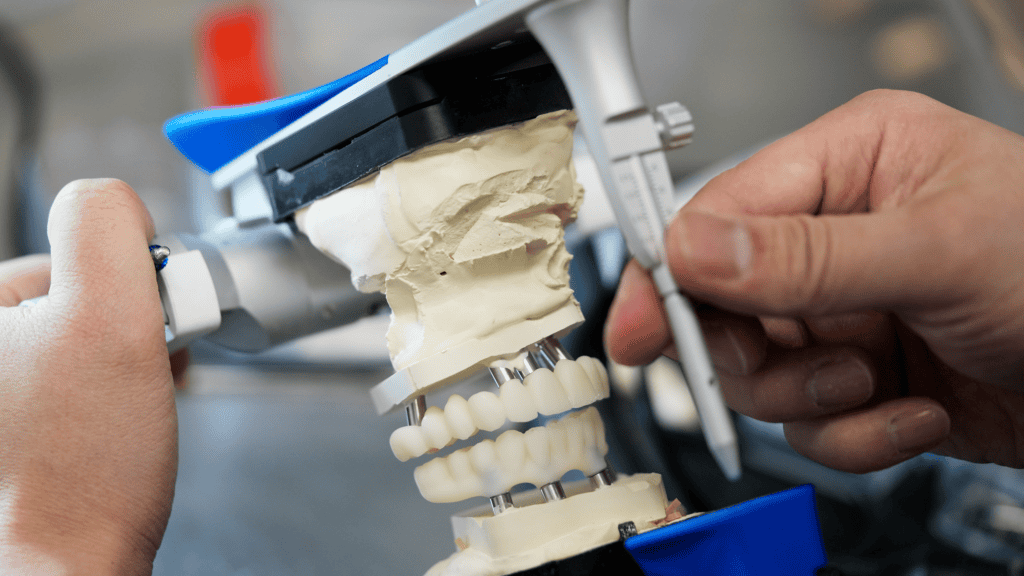
The bridge itself is typically fabricated from zirconia, a high-strength dental ceramic valued for its durability, natural appearance, and biocompatibility. At Advanced Dental Artistry, full teeth replacement using zirconia bridges is our primary implant focus.
All-On-4, All-On-6, and All-On-X: Understanding the Difference
You may have come across terms like All-On-4, All-On-6, or the broader term All-On-X. These all refer to full arch implant protocols in which a fixed bridge is anchored by a specific number of implants placed in a single arch. Here is a general breakdown:
All-On-4
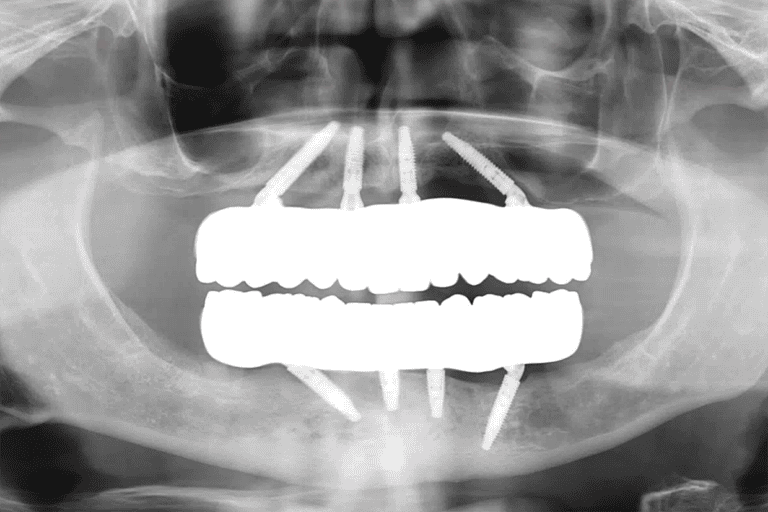
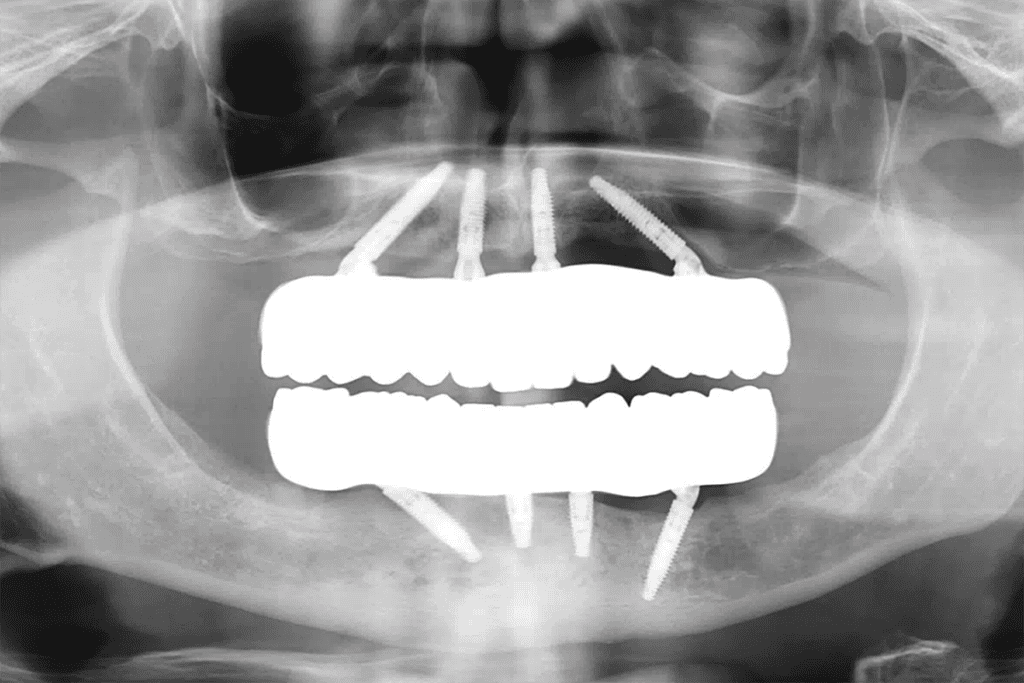
The All-On-4 protocol uses four implants per arch to support a full fixed bridge. Two implants are placed vertically at the front, and two are placed at an angle toward the back of the jaw. The angled placement helps maximise contact with available bone and can often reduce the need for bone grafting in patients with some bone loss. All-On-4 is one of the most widely used full arch protocols available.
All-On-6
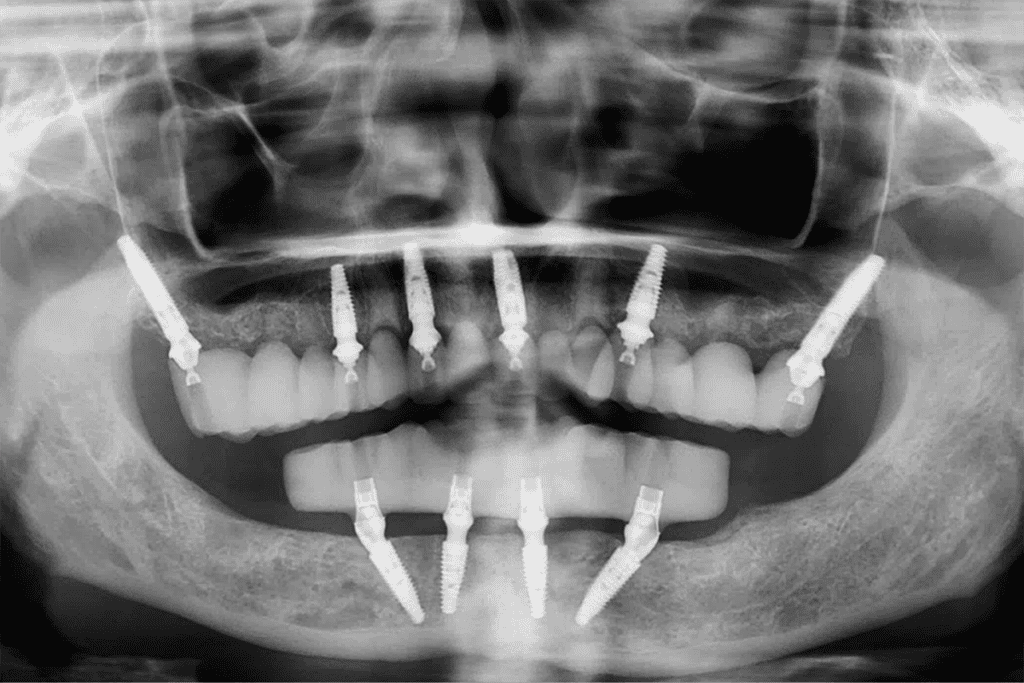
All-On-6 follows the same general concept but uses six implants per arch. The additional two implants can offer broader load distribution across the bridge, and this approach may be recommended when the jawbone is well-suited to supporting additional fixtures or when greater long-term stability is a priority.
All-On-X
All-On-X is an umbrella term covering any full arch implant protocol where a complete bridge is supported by multiple implants. The number of implants can vary, for example five per arch in some cases, depending on the patient’s anatomy, bone quality, and clinical requirements. Your dentist will determine the most appropriate configuration for your specific situation.
In all of these cases, the outcome is a fixed, non-removable bridge that is securely attached to the implants. It is not taken out for cleaning like a traditional denture and is designed to function as a long-term solution.
How Many Implants Are Typically Needed?
The number of implants required for full teeth replacement will depend on several factors, including jaw location, bone density, and the specific protocol recommended by your dentist. As a general guide:
- Lower arch (fixed bridge): Four to six implants are commonly used. The lower jaw (mandible) generally has denser bone, which can provide solid stability with fewer implants in some cases.
- Upper arch (fixed bridge): Four to six implants are typically recommended. The upper jaw (maxilla) has softer bone and the sinus cavities above the back teeth can limit available bone height, which is why upper arch treatment often involves more careful planning and sometimes preparatory treatment.
- Both arches: If full teeth replacement is required across both the upper and lower jaws, implants will be planned for each arch separately, with the total number reflecting the individual requirements of each.
These are general ranges only. Your treating dentist will take detailed imaging, including 3D cone beam CT scans, to assess your bone volume and quality before recommending a specific implant number and placement plan.
Why the Upper and Lower Jaws Require Different Approaches
The upper and lower jaws have distinct anatomical characteristics that influence how implants are placed and how many are needed.
The lower jaw tends to have denser, more compact bone. This generally allows for good primary stability when implants are placed, and in many cases four implants can adequately support a full lower arch bridge.
The upper jaw presents a more complex picture. Its bone is typically less dense, and the maxillary sinuses sit above the back teeth, limiting the available bone height in that region. As a result, upper arch treatment may involve angled implant placement (as used in All-On-4), additional implants, or preparatory procedures such as a sinus lift to create a suitable foundation. Your dentist will assess your upper jaw anatomy in detail before making any recommendations.
The Role of Bone Density and Grafting
Bone density is one of the most significant factors in determining how many implants can be placed and where. Healthy, dense bone allows implants to achieve strong initial stability and supports successful long-term integration. When bone density is lower, due to factors such as tooth loss over time, age, or health conditions, additional implants or preparatory treatment may be required.
In some cases, a bone graft may be recommended before implants can be placed. This involves adding bone material to areas of deficiency to build up a more adequate base. While grafting does extend the overall treatment timeline, it can be an important step toward a stable, lasting outcome.
Not all patients will require grafting. One of the advantages of angled implant placement, as used in the All-On-4 protocol, is that it can sometimes utilise denser bone further forward in the jaw, reducing or eliminating the need for grafting in suitable candidates. Your dentist will advise you based on your specific scans and anatomy.
Zirconia Bridges: The Material Used in Full Arch Replacement
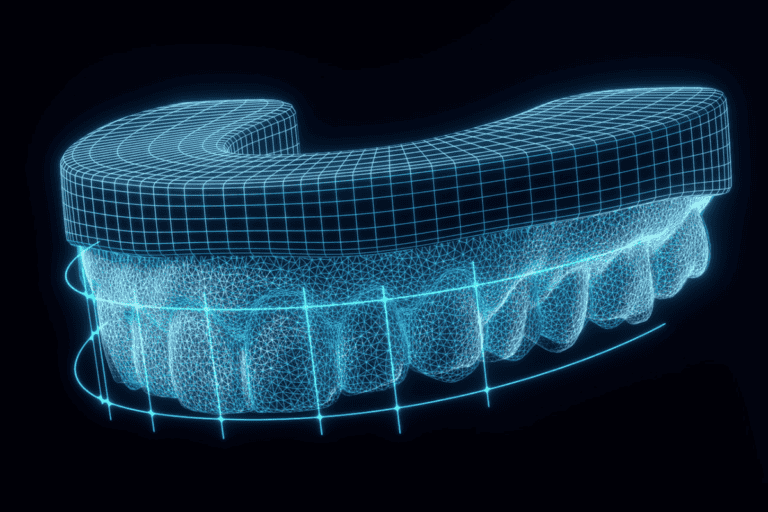
Once the implants have integrated with the jawbone, the final restoration is a custom-fabricated bridge that is attached to the implants. At Advanced Dental Artistry, we use zirconia for our full arch bridges.
Zirconia is a high-strength dental ceramic that offers several advantages for full arch restorations:
- It is highly resistant to chipping and fracture, making it well suited to the demands of full arch biting and chewing forces.
- It closely mimics the appearance of natural teeth, with good translucency and a lifelike colour.
- It is biocompatible and well tolerated by gum tissue.
- It does not stain in the way that some other materials can over time.
A zirconia bridge is fabricated to fit your specific arch and implant positions, and is designed as a long-term restoration. Your dentist will discuss the design and aesthetics of your bridge with you as part of the treatment planning process.
Common Questions About Implant Numbers
Is All-On-4 suitable for everyone?
All-On-4 can be a suitable option for many patients seeking full teeth replacement, particularly those with some bone loss who may wish to avoid more extensive grafting procedures. However, suitability depends on individual factors including bone quality, bite forces, and overall oral health. Your dentist will assess whether All-On-4 or an alternative protocol is most appropriate for your case.
What is the difference between All-On-4 and All-On-6?
Both protocols support a full fixed arch bridge. All-On-4 uses four implants per arch, with the rear implants placed at an angle to maximise bone contact. All-On-6 uses six implants and may be recommended when additional support is beneficial. The choice between them depends on your bone anatomy, the arch being treated, and your dentist’s assessment of what will provide the most stable, long-term outcome.
Can I have both arches replaced at the same time?
In many cases, yes. Treatment can be planned for both the upper and lower arches, either simultaneously or in stages, depending on your health, treatment preferences, and clinical requirements. Your dentist will discuss the sequencing of your treatment plan with you at your consultation.
How long does a full teeth replacement take?
The overall timeline varies between patients. It depends on whether preparatory treatment is needed, how quickly implants integrate with the bone, and the complexity of your case. Your dentist will give you a realistic timeframe as part of your personalised treatment plan.
A Note on Implant-Supported Overdentures
You may come across the term implant-supported overdenture during your research. An overdenture is a removable denture that clips onto implants for improved stability, rather than being permanently fixed in place. Two to four implants in the lower jaw are typically used to retain a lower overdenture, while the upper jaw generally requires three to four implants.
Overdentures can be a practical option in certain clinical and budgetary circumstances and are worth understanding as part of the broader landscape of implant options.
However, it is worth noting that Advanced Dental Artistry specialises in fixed full teeth replacement using All-On-X protocols and zirconia bridges. We focus on permanent, non-removable solutions rather than overdentures. If you are specifically looking for a fixed full arch outcome, this is the area in which our team works. If an overdenture is ultimately a more appropriate option for your situation, your dentist will be transparent with you about this during your consultation.
What to Expect at a Consultation
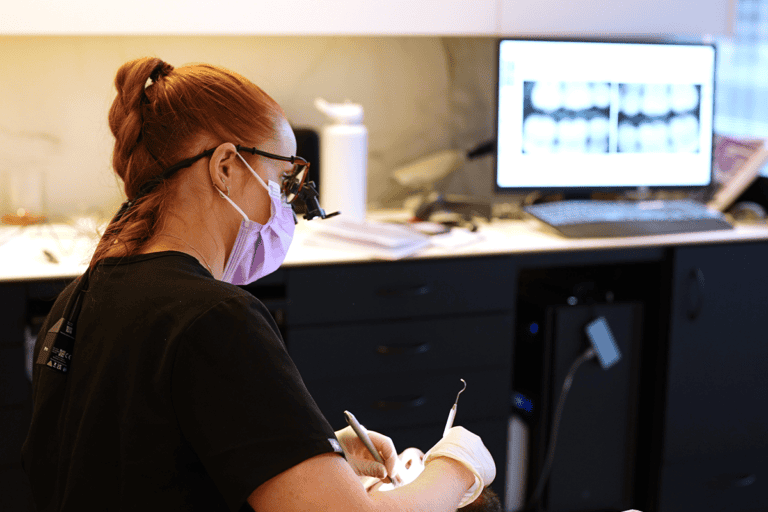
A thorough consultation is the essential first step toward full teeth replacement. At Advanced Dental Artistry, your initial assessment will typically include:
- A clinical examination of your current oral health, including your remaining teeth, gums, and bite
- 3D cone beam CT imaging to evaluate your bone volume, quality, and anatomy across both arches
- A detailed discussion of your goals, including whether you are considering All-On-4, All-On-6, or another All-On-X configuration
- An assessment of whether any preparatory treatment, such as extractions, bone grafting, or sinus lifting, may be needed
- A personalised treatment plan outlining the recommended implant protocol, bridge design, expected treatment stages, and overall timeline
The consultation is also your opportunity to ask questions and make sure you feel well-informed before making any decisions. There is no obligation to proceed, and our team is here to help you understand your options clearly.
| Ready to explore full teeth replacement?Every patient’s situation is different, and a detailed consultation is the best way to understand which full arch solution is right for you. Advanced Dental Artistry offers comprehensive implant consultations with 3D imaging and a personalised treatment plan. To book your consultation, contact us at (08) 6165 3888 or visit www.advanceddentalartistry.com.au. |
The Takeaway
Full teeth replacement using implant-supported zirconia bridges is a well-established approach to restoring a complete arch of missing or failing teeth. Whether the solution is All-On-4, All-On-6, or another All-On-X configuration, the core principle is the same: a small number of strategically placed implants support a fixed, permanent bridge designed to function as a long-term restoration.
The right number of implants for your situation will depend on your jaw anatomy, bone quality, and treatment goals. An assessment with a qualified dental professional, including detailed imaging, is the essential first step toward understanding your options.
Advanced Dental Artistry focuses on fixed full arch implant treatment using zirconia bridges. If you would like to learn more or book a consultation, please get in touch with our team.
Disclaimer
This article is intended as general educational information only and does not constitute personalised dental or medical advice. Individual treatment requirements vary significantly. Please consult a qualified dental professional for an assessment specific to your oral health needs.